

Introduction
The modern home is often described as private, personal, expressive, and curated. That vocabulary sounds harmless. It is also evasive. Houses do not merely shelter life. They instruct it. Rooms teach posture, memory, rank, appetite, and restraint long before anyone writes a manifesto about beauty or morality. The household is the first school with walls thick enough to be mistaken for furniture. Scholars in anthropology and architectural theory have long treated domestic space as a social form, one that encodes cosmology and hierarchy through layout, thresholds, and daily use rather than through abstract doctrine alone (Bourdieu 1970; Lawrence 1987).
That older truth matters now because modern people still load interiors with symbols while pretending they are making neutral consumer choices. A marble countertop, an icon in a corner, a bookshelf staged for visitors, a dining room kept for feast days, a scent diffused through the hall, a velvet sofa placed under a framed print of some mythic landscape, all of this forms an environment of instruction. The house remains a theater of belief even when the script has been reduced to branding, aspiration, and mood management. One age had household gods. Another has design influencers. The furniture changed faster than the liturgy.
Ancient societies understood this more clearly than modern ones. In the Roman world, mythological painting, decorative programs, luxury furnishings, and spatial sequencing worked together to shape the experience of domestic life. The house was not a blank container into which art was later dropped like garnish on a bad meal. Art was part of the architecture of meaning. Mythic scenes in dining rooms, reception areas, gardens, and passage spaces did cultural work. They staged power, danger, education, memory, and divine proximity inside the ordinary rhythms of receiving guests, sharing meals, and moving through the household (Squire 2012; Wallace-Hadrill 1994).
This article argues that domestic art turned everyday rooms into stages of the sacred by joining myth, luxury, and spatial order into a single experience. That pattern did not die with antiquity. It changed costume. Modern interiors still signal creeds about purity, prestige, family, desire, and transcendence. The task here is to recover that continuity without museum fog or lifestyle chatter. A house always says what man is for. Even silence becomes decorative after enough money is spent on it.
I. The House Was Never Neutral
The fantasy of the neutral house is a recent one, and not a very convincing one. Across cultures, scholars of domestic space have shown that the house functions as more than a practical shell. It orders relations between public and private, male and female, guest and kin, purity and danger, memory and forgetting. Even the simplest arrangement of entrance, hearth, sleeping area, and ceremonial zone creates a map of value. A floor plan is an argument with a roof on top (Bourdieu 1970; Lawrence 1987).
That point becomes clearer when one leaves modern real estate language behind. Anthropological work on domestic space has often treated the house as a small social cosmos, a built form in which larger cultural ideas become habitable. In such readings, the home is not merely where social life happens. It is one of the chief means by which social life is reproduced. Repetition, placement, and sequence do the work. Where one enters, where one eats, where one receives outsiders, where one stores ancestral objects, where one places sacred images, these choices accumulate into habit. Habit then hardens into outlook. Outlook eventually pretends it invented itself (Bourdieu 1970; Lawrence 1987).
The old house knew this without apology.
In antiquity, domestic decoration therefore mattered at a level deeper than display. Roman houses in particular reveal a world in which painted walls, mosaics, sculptural programs, gardens, and axial views were bound to status and meaning. Owners did not decorate rooms at random. Particular forms of art appeared in relation to particular forms of movement and reception. The guest’s path through the house could be managed through visual drama. The owner’s cultural literacy could be displayed without a spoken lecture. Myth entered before the host finished greeting anyone. A good mural can dominate a conversation while pretending to keep quiet (Wallace-Hadrill 1994; Squire 2012).
The symbolic charge of domestic space also explains why luxury has always exceeded comfort. Expensive materials and elaborate décor do not merely soften life. They render values tangible. To import rare stone, commission mythological panels, install fine tableware, or arrange rooms for ceremonial hospitality is to declare that the house is a worthy stage for meanings larger than bodily need. Luxury, in this older sense, functioned as concentrated significance. It marked the home as a place where cultivated order had been achieved, or at least aggressively advertised. Civilization has always produced a few men willing to bankrupt themselves for drapery and immortality. The drapery is easier to invoice (Hales 2003; Wallace-Hadrill 1994).
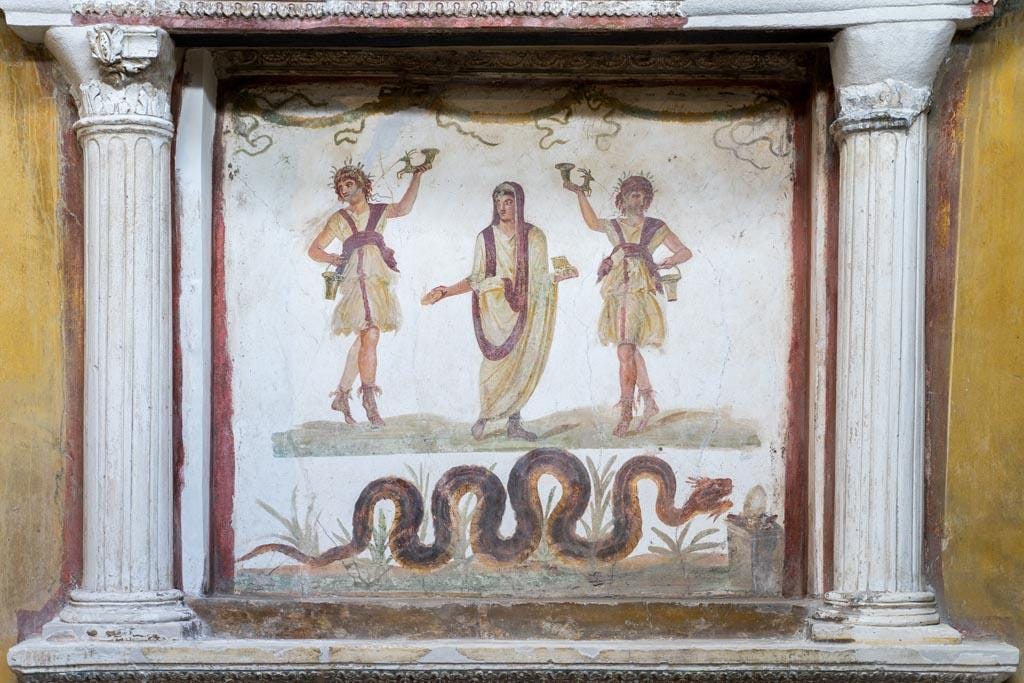
This is why domestic space belongs in any serious discussion of myth and religion. The sacred is rarely confined to temples alone. It seeps outward into the house through image, ritual object, orientation, feast practice, hospitality customs, and inherited aesthetic grammar. A family may never produce a formal theology of its interior. The interior will still produce a theology of the family. Thresholds teach inclusion and exclusion. Tables teach communion and rank. Bedrooms teach privacy, fertility, withdrawal, or disorder. Walls teach what deserves to be remembered. The house catechizes with stubborn patience (Bourdieu 1970; Lawrence 1987).
Modern readers are often tempted to place all this at a safe historical distance, as if symbolic domestic space were a Roman hobby or a medieval reflex. That temptation should be resisted. The contemporary home still carries ritual weight, though the symbols have become less candid. Open-plan interiors proclaim views about family and surveillance. Minimalist rooms preach restraint, self-command, and hygienic purity. Maximalist rooms preach abundance, theatricality, and cultivated appetite. Luxury brands fill domestic interiors with coded promises about status and belonging. Even the supposedly secular home remains heavy with mythic residue. The gods, dismissed from the front door, return through the catalog.
That is the necessary starting point. The house was never neutral because human beings were never neutral about dwelling. To dwell is to arrange the world in miniature. Once that fact is admitted, domestic art stops looking ornamental and starts looking constitutional. The household constitution may be written in paint, stone, textile, silver, or light. It is still law.
II. Myth Entered the Home Through Art
Myth did not enter the Roman house as a stray embellishment. It arrived as structure. In elite domestic interiors, mythological scenes were placed where people dined, reclined, received guests, and moved through carefully staged routes. These paintings did not sit on the wall like passive illustrations. They shaped the atmosphere of the room, and with it the meaning of the social act taking place inside. A banquet set beneath the fall of Niobe or the pursuit of Actaeon was not merely a meal with cultured wallpaper. It was a social performance under the sign of memory, danger, beauty, and divine judgment (Squire 2012; Wallace-Hadrill 1994).
This matters because myth in the house was bound to use, not floating above it. Scholars of Roman domestic art have shown that mythological imagery worked within ensembles. Images, sightlines, gardens, statuary, painted architecture, and movement through rooms were joined into a single experience. The Roman house was a machine for producing impression. Guests did not merely see a painted story. They were placed inside a sequence of meanings that reflected on the owner’s cultivation, moral seriousness, and claims to status. Roman hospitality had a habit of turning aesthetics into social artillery (Hales 2003; Wallace-Hadrill 1994).
The myths chosen for these interiors were rarely innocent. Newby shows that violent and unstable mythic episodes often appeared in settings designed for cultivated leisure. This was not a contradiction. It was part of the point. The elegant house absorbed scenes of pursuit, punishment, metamorphosis, and loss into a refined domestic order. The result was a strange but potent fusion of luxury and peril. The room announced that its owner could master beauty without flinching from tragedy. Civilization, at its more theatrical moments, likes to eat figs while looking at divine catastrophe (Newby 2012).
Mythological painting also served a social and intellectual function. It signaled paideia, that cultivated literacy by which Roman elites aligned themselves with Greek cultural prestige. A guest who recognized the scene, the variant of the story, or the emotional register being staged proved himself worthy of the room. Trimble makes this especially clear in showing how mythic images positioned viewers within a hierarchy of interpretation, gendered expectation, and elite self-understanding. A wall could test a man’s education faster than a conversation could (Trimble 2002; Hales 2003).
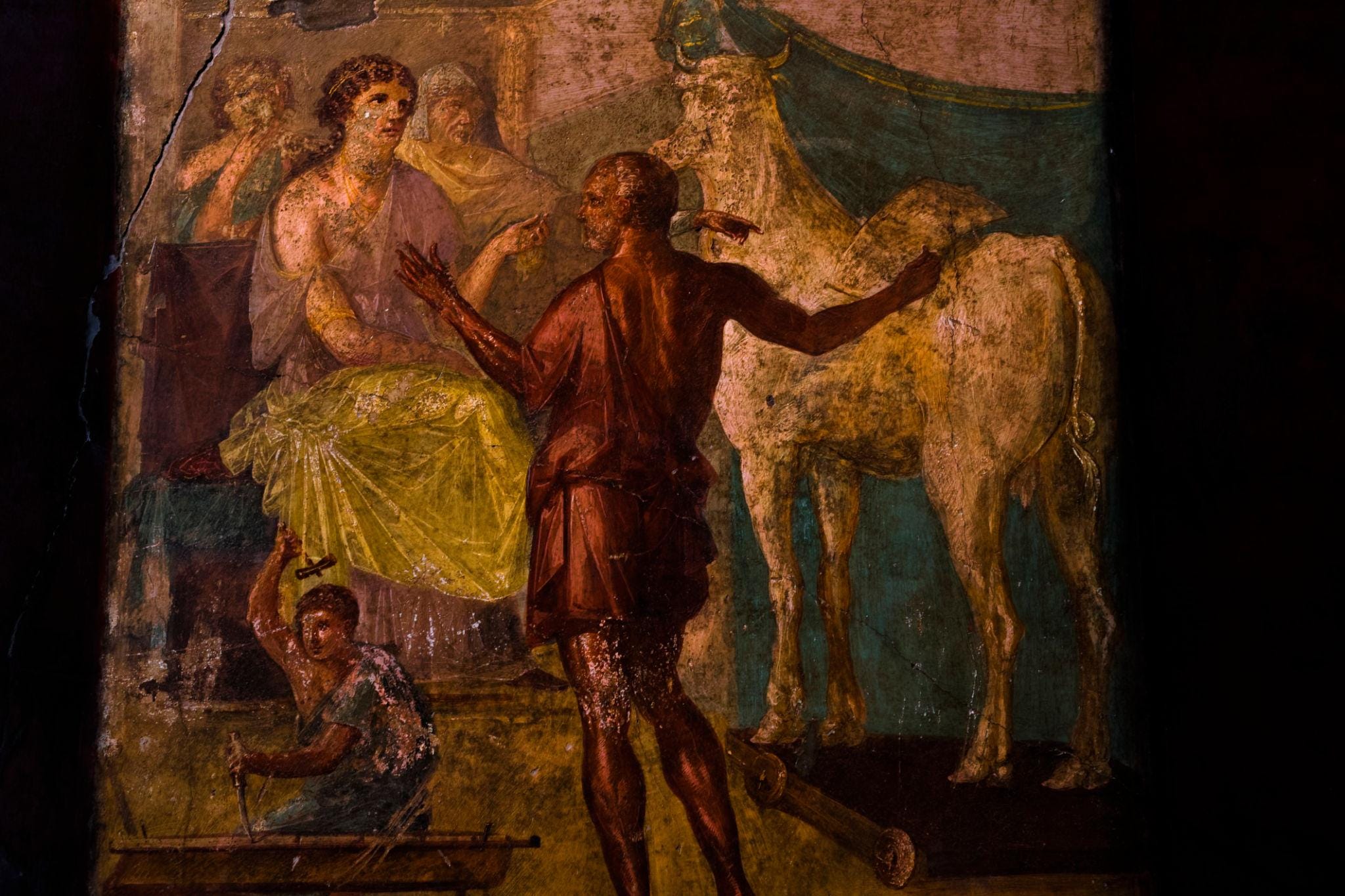
There is also a religious dimension here that modern treatments often flatten. Roman myth was not fiction in the thin modern sense. Even when deployed in decorative form, it carried sacred residue. Gods, heroes, punishments, transformations, and ritual places brought divine order into the household environment. The domestic setting did not cancel their charge. It domesticated it without emptying it. This is one reason Roman interiors could slide so easily between pleasure, prestige, and reverence. The sacred had not yet been fully evicted from beauty. It still occupied the room, even when reclining at dinner (Squire 2012; Wallace-Hadrill 1994).
The placement of mythological images also mattered. Paintings in reception rooms and triclinia carried one kind of message, while those in bedrooms or more intimate spaces carried another. Studies of reconstructed rooms at Boscotrecase suggest that these programs could manipulate narrative time and juxtaposition in ways that rewarded prolonged viewing. The Roman interior was not always blunt. At times it behaved with the cunning of poetry, revealing one implication from this angle and another from the next. Good decoration has always known how to hover between statement and ambush (Weber 2023; Lorenz 2005).
This is why it is too weak to say that mythological painting decorated the Roman house. Decoration suggests surplus. These images were closer to visual governance. They organized perception. They linked domestic life to larger narratives of fate, eros, violence, and divine presence. They made the house feel older than its owner and larger than its walls. Once that is seen clearly, the modern interior begins to look less modern than advertised. It still surrounds daily life with curated narratives, symbolic codes, and selective visions of the good. The myths are different. The mechanism remains embarrassingly familiar (Aureli 2016; Hales 2003).
III. Luxury Made Belief Visible
Luxury in the ancient house was never a matter of comfort alone. Comfort mattered, of course. Even Romans preferred not to dine on splinters. Yet the deeper function of luxury was symbolic. Fine materials, rare pigments, polished stone, imported marbles, mythological panels, silverware, sculpted fountains, and carefully staged garden views translated social meaning into physical experience. Luxury made invisible claims visible. It gave rank a texture and belief a surface (Wallace-Hadrill 1994; Hales 2003).
This is why luxury belongs inside the study of religion and myth rather than off to the side as a footnote about expensive taste. In many ancient societies, precious materials had sacred associations long before they had purely commercial ones. Gold, ivory, purple dye, incense, carved stone, and worked metal moved between temple, palace, and elite household with surprising ease. Their value did not arise from scarcity alone. It arose from concentration. These materials condensed distance, labor, sacrifice, and prestige into an object that could be seen, touched, guarded, and displayed. Matter became metaphysical with a receipt attached (Elsner 1995; Muth 1998).
Roman domestic interiors reveal this vividly. Wallace-Hadrill argues that the Roman house was structured by gradients of access and display, with architectural and decorative richness intensifying social distinctions within the household itself. The layout of the house, from entrance to atrium to triclinium to more private spaces, created a calibrated drama of revelation. Luxury was not strewn about like confetti. It was rationed by meaning. Some rooms dazzled because they were meant to. Others withheld because the economy of prestige depends on sequence. Splendor shown all at once becomes upholstery (Wallace-Hadrill 1994; Hales 2003).
That same logic governed the objects within those rooms. Fine tableware did more than serve food. It elevated feasting into theater. Marble veneers did more than sheath walls. They suggested permanence, expense, and a kind of geological authority. Painted architectural fantasies did more than expand cramped interiors. They placed the household inside imagined worlds of colonnades, sanctuaries, groves, and distant vistas. The Roman interior did not merely contain luxury. It staged a world in which refinement appeared natural, inherited, and inevitable. That is usually the moment when power is trying hardest (Clarke 1991; Zanker 1998).
Luxury also made myth credible. A mythological scene rendered with rich pigments and placed within a sophisticated spatial program carried more than narrative content. It carried weight. The surrounding material environment told the viewer that the story mattered. Divine pursuit, heroic loss, erotic danger, metamorphosis, and judgment all gained force when housed within rooms shaped for formal hospitality and cultivated leisure. The household thus joined aesthetic pleasure to moral and symbolic seriousness. Beauty was not a distraction from significance. It was one of significance’s preferred delivery systems. The ancients understood that a truth dressed well is harder to ignore (Trimble 2002; Squire 2012).
At the same time, luxury in the house always hovered near moral risk. Roman writers themselves worried about excess, softness, imported decadence, and the corrupting effects of opulence. This anxiety is part of what makes luxury so revealing. It never signifies wealth alone. It signifies a theory of worthy expenditure. A society that lavishes resources on shrines, public monuments, ceremonial houses, and inherited objects is making one set of claims. A society that lavishes them on disposable fashion, novelty consumption, and short-lived status goods is making another. One can often diagnose a civilization by what it polishes (Edwards 1993; Hales 2003).
This tension helps explain why domestic luxury was so potent. It stood at the border between devotion and vanity, memory and indulgence, sacred order and personal display. In the best interiors, luxury clarified form and deepened symbolic life. In weaker ones, it drifted into exhibition and appetite. That distinction remains with us. A carefully made room can still gather a family into reverence, feast, and recollection. Another can look expensive while saying nothing beyond the owner’s purchasing power. The difference is not budget. It is metaphysics with better lighting (Aureli 2016; Pallasmaa 2012).
Seen in this light, luxury was one of the chief means by which belief became habitable. It gave ideology a body. It allowed myth to dwell among furniture, table service, textiles, and walls. It transformed the home from a site of shelter into a site of declaration. This is why luxury cannot be dismissed as decorative excess. In serious houses, it has always done heavier work. It makes value visible. It turns conviction into atmosphere. It tells the visitor what kind of world this household thinks it lives in, and what kind of world it hopes to deserve.
IV. Domestic Space Trained the Moral Imagination
The house shapes conduct long before it shapes opinion. Children learn order, shame, permission, reverence, and nearness through repeated movement in rooms whose meanings are rarely explained because they do not need to be. The body understands thresholds before the tongue can defend them. A hall can teach restraint. A table can teach rank. A corner set apart for prayer, memory, or display can teach that some things deserve a different posture from others. Domestic space forms judgment by giving moral experience a routine address (Bourdieu 1970; Lawrence 1987).
This helps explain why ancient domestic art mattered beyond ornament or prestige. Mythological images in Roman houses were part of a wider pedagogy of seeing. They did not merely entertain guests or flatter owners. They trained viewers to recognize a world structured by fate, desire, punishment, beauty, and divine interference. That training was subtle because it was ambient. One did not need to stop before a panel and deliver a lecture on Actaeon or Ariadne. It was enough to live among such figures, dine under their stories, and pass them on the way to ordinary tasks. Repetition does the work that slogans only dream about doing (Trimble 2002; Squire 2012).
The moral effect of domestic space also depends on sequence. Roman houses, like many traditional houses, were arranged in ways that distinguished between outer and inner, public and intimate, visible and reserved. These spatial distinctions were not morally neutral. They taught who could go where, under what conditions, and with what degree of familiarity. A guest was not the same as a kinsman. A master was not the same as a servant. A feast was not the same as sleep. Architecture gave these distinctions a physical grammar. Modern egalitarian language tends to dislike such facts, though walls remain stubbornly unimpressed by democratic theory (Wallace-Hadrill 1994; Clarke 1991).
This training reached beyond rank into ritual. Household shrines, ancestral portraits, seasonal decorations, feast arrangements, and ceremonial objects all helped convert the home into a place where time itself acquired structure. Certain rooms or surfaces could be transformed by holidays, mourning practices, marriage customs, or acts of hospitality. In that setting, morality ceased to be a list of rules floating above life. It became a choreography. The family learned what to honor by learning when to stand, gather, eat, offer, or refrain. A civilization survives in part by teaching timing, which is a less glamorous phrase than wisdom but usually more accurate (Carsten and Hugh-Jones 1995; Pallasmaa 2012).
Christian domesticity inherited much of this older logic, though it altered its symbols. The Roman lararium gave way, in many places and periods, to icons, crucifixes, devotional prints, relic cabinets, family Bibles, and small altars of remembrance. The sacred migrated into the household through visual and material forms that structured daily life without requiring constant verbal explanation. A crucifix above the bed, an icon by the door, a candle before a feast day meal, these are not decorative extras. They orient the soul by fixing transcendence within reach of habit. The home becomes capable of recollection because its objects refuse to let memory go entirely soft (Brown 1981; Elsner 1995).
Modern domestic interiors continue this formative work even when they reject explicit religious symbolism. The moral imagination is still trained by atmosphere, placement, repetition, and selection. A house centered on screens, perpetual distraction, and disposable goods teaches one set of lessons. A house shaped by books, durable materials, inherited objects, hospitality, and visible signs of devotion teaches another. Both are educational environments. Both preach through arrangement. One merely prefers to call its sermon a lifestyle choice. The phrase is useful because it makes catechism sound like shopping (Aureli 2016; Pallasmaa 2012).
This is why debates about interiors are never only about taste. Taste is the public face of a deeper struggle over what the home is for. If dwelling is merely consumption at rest, then domestic space will drift toward convenience, novelty, and self-display. If dwelling is a moral and symbolic act, then the home must offer more than comfort. It must offer pattern, memory, restraint, welcome, and a grammar of significance. The moral imagination needs architecture because abstraction alone cannot raise a child or steady a civilization. Someone must decide where the table goes.
V. Modern Interiors Still Worship Something
Modern interiors present themselves as matters of preference. The claim sounds modest. It is anything but. Preferences harden into patterns, patterns harden into rituals, and rituals eventually reveal a creed. The contemporary home still organizes belief through objects, surfaces, sightlines, and repeated habits, even when it avoids explicit sacred language. Scholarship on domestic space has long treated the home as a site where social identities and systems of value are made visible through arrangement and use. More recent work on the domestic interior reaches the same conclusion from the side of consumption, showing that style in the home functions as a social language rather than as a pile of innocent choices. The room is speaking long before the owner begins explaining himself (Campbell 2020; Madigan and Munro 1996).
Minimalist interiors provide one of the clearest examples. They are often described in the language of calm, purity, control, and clarity. Those words are not neutral. They amount to a moral vocabulary. A stripped room, sparse palette, concealed storage system, and polished surfaces do more than reduce visual clutter. They stage a vision of the self as disciplined, restrained, and frictionless. The older sacred interior set apart holy objects. The modern minimalist interior often sets apart emptiness itself. It turns absence into a sign of refinement. The old monk had a cell. The modern professional has a kitchen that looks like it is waiting for a customs inspection. Studies of modern interiors and minimalist aesthetics show how such spaces frame identity and aspiration rather than merely accommodating use (Campbell 2020; Walker 2002).
Maximalist and luxury interiors preach a different gospel. Here the home becomes a theater of abundance, memory, cosmopolitan appetite, and cultivated possession. Layered textiles, collected objects, historic references, rare finishes, and dramatic furnishings communicate that life is richest when it appears full, traveled, and sensuously charged. This style can preserve genuine inheritance and beauty. It can also decay into acquisition without meaning. Yet even in its weaker forms, it still demonstrates the main point. The domestic interior is never mute. It arranges the visible world into a story about what deserves admiration. Consumer research on possessions and the home has shown that domestic objects extend identity and social belonging well beyond utility. People do not simply own interiors. They inhabit their chosen mythology through them (Belk 1988; Madigan and Munro 1996).
The supposedly secular home also retains ritual structure. Screens command attention like household idols, dining spaces still mark the difference between routine consumption and ceremonial gathering, and carefully curated shelves or mantels serve as miniature altars of memory, status, or aspiration. Family photos, candles, heirlooms, coffee-table books, framed prints, and symbolic objects occupy positions of visual honor. None of this is accidental. The house continues to divide the ordinary from the elevated, even when it denies any theology behind the distinction. A society may stop kneeling before saints and still kneel before atmosphere. It will merely charge more for the candle. Work on the ideological construction of domestic interiors and on the home as a historically produced space helps make this continuity visible (Aureli 2016; Walker 2002).
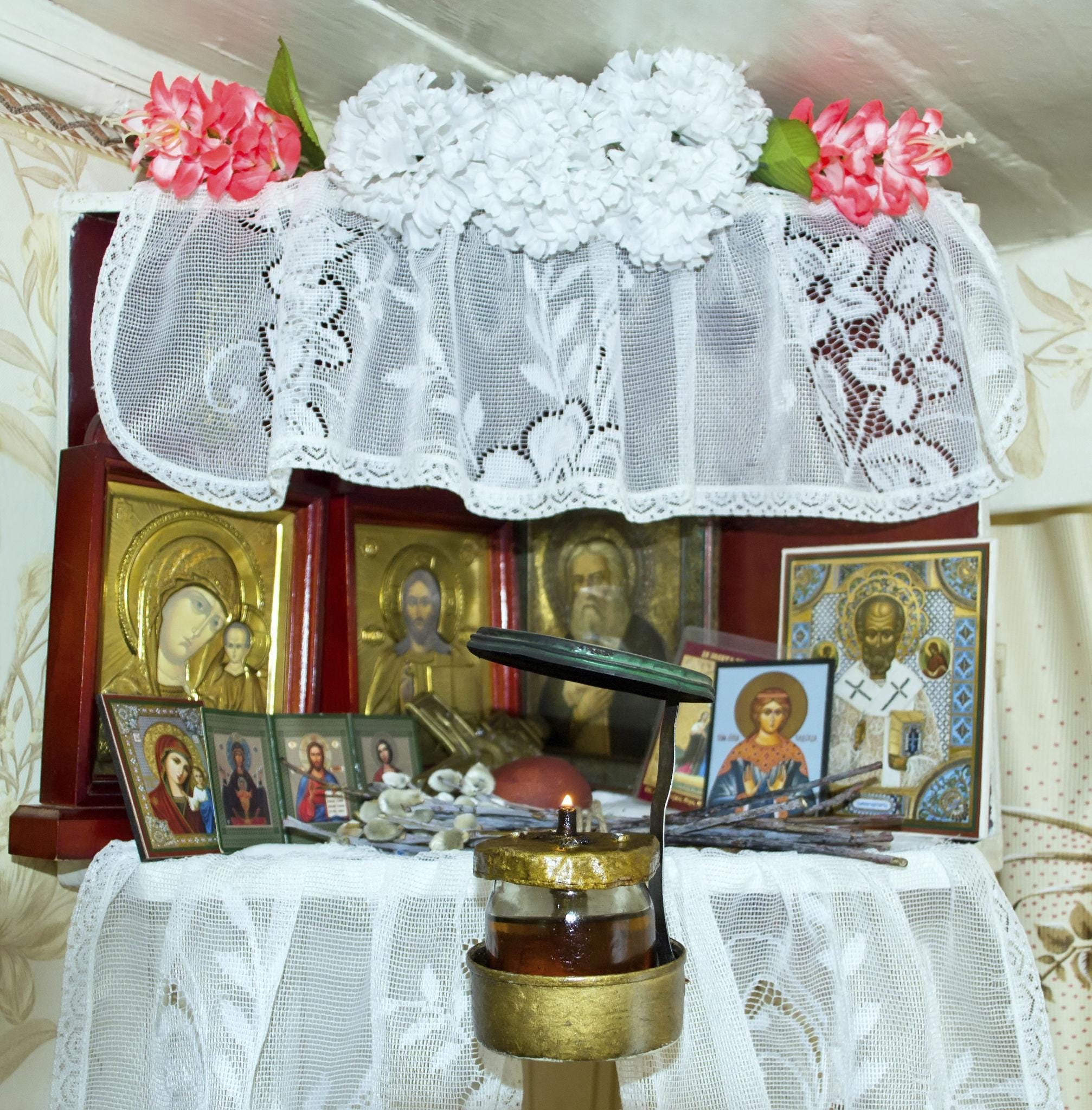
This is why the modern interior should be read with the same seriousness given to older domestic worlds. It still trains desire. It still teaches rank. It still marks purity and contamination, welcome and exclusion, display and concealment. What has changed is not the symbolic function of the house but the frankness with which that function is acknowledged. The Roman patron placed myth on the wall and let the guest draw the lesson. The modern homeowner places ideology into the room and calls it a vibe. The euphemism is newer than the instinct. Houses remain schools of vision, whether their curriculum comes from liturgy, inheritance, commerce, or design media (Campbell 2020; Lawrence 1982).
VI. The Return of the Meaningful Interior
The remedy for the modern interior is not random ornament, nostalgic clutter, or a luxury binge disguised as taste. Those are common mistakes of reaction. They confuse symbolic density with symbolic order. A room becomes meaningful when its forms, materials, images, and rhythms express a coherent account of what human life is for. That has always been the real issue. The question is never whether a house will symbolize something. It always will. The question is whether it symbolizes anything worthy of loyalty (Pallasmaa 2012; Aureli 2016).
Traditional domestic worlds understood that beauty needed hierarchy. Certain objects were given pride of place because certain realities were held to be higher than others. The hearth, the table, the family image, the icon, the inherited object, the ceremonial textile, the well-made chair, the threshold itself, each of these could carry more than function because each belonged to a pattern of significance. The room was not crowded for its own sake. It was ordered toward memory, reverence, hospitality, and continuity. A house should not feel like a storage unit with opinions. It should feel like a world in miniature (Bourdieu 1970; Carsten and Hugh-Jones 1995).
This is where contemporary design often falters. It excels at mood and frequently fails at meaning. It can produce calm without reverence, abundance without gratitude, elegance without inheritance, and luxury without transcendence. Such interiors may photograph well and live poorly. They soothe the eye while leaving the imagination underfed. The problem is not that they are modern. The problem is that they refuse to declare what kind of life they are trying to honor. A room that cannot answer that question will eventually become a showroom for hesitation. Taste, left unattended, turns into a polite form of drift (Madigan and Munro 1996; Walker 2002).
A meaningful interior, by contrast, does several things at once. It distinguishes what is central from what is peripheral. It gives visible form to family, memory, feast, work, mourning, and repose. It allows beauty to gather around use rather than flee from it. It admits that the home is a moral environment before it is a consumer environment. This does not require wealth. It requires intention. A well-placed icon, an inherited table, a shelf of books used and loved, a window given proper dignity, a room arranged for conversation rather than passive distraction, these can bear more civilizational weight than a catalog’s worth of expensive emptiness. Grandeur is sometimes a matter of proportion before it is a matter of price (Lawrence 1987; Pallasmaa 2012).
The older domestic interior also reminds modern readers that sacred meaning need not remain confined to monumental architecture. Cathedrals and temples matter because they publicize transcendence. Houses matter because they domesticate it without trivializing it. They bring significance into repetition. A family that eats beneath symbols of gratitude, keeps places for memory, marks the seasons with visible forms, and orders rooms toward gathering rather than dispersion is already resisting the thinness of contemporary life. Architecture at the household scale can still school the soul. The lesson arrives quietly, which is one reason it lasts (Brown 1981; Elsner 1995).
This returns us to the central argument. Domestic art turned everyday rooms into stages of the sacred because the house has always been more than shelter. In antiquity, mythological painting, luxury materials, spatial sequence, and ritual use joined to make the interior a theater of belief. In later Christian settings, other symbols took up the same task. In modern homes, symbolic formation continues under softer names and weaker gods. The continuity is plain enough once one stops pretending that décor is innocent. Every household arranges a cosmos, whether noble or vulgar, inherited or improvised, reverent or dissipated. The walls are always teaching.
The recovery of the meaningful interior begins with candor. One must admit that the home is an instrument of formation. From there, the task is constructive. Order the house toward what deserves permanence. Give beauty a job beyond display. Let objects answer to memory, ritual, hospitality, and truth. A civilization declines in public before it declines in private. It is rebuilt the other way around.
References
Aureli, Pier Vittorio. 2016. “Familiar Horror: Toward a Critique of Domestic Space.” Log 37: 117 to 22.
Belk, Russell W. 1988. “Possessions and the Extended Self.” Journal of Consumer Research 15 (2): 139 to 68.
Bourdieu, Pierre. 1970. “The Berber House or the World Reversed.” Social Science Information 9 (2): 151 to 70.
Brown, Peter. 1981. The Cult of the Saints: Its Rise and Function in Latin Christianity. Chicago: University of Chicago Press.
Campbell, Elizabeth J. 2020. “New Perspectives on the Domestic Interior.” Journal of Interior Design 45 (3): 1 to 8.
Carsten, Janet, and Stephen Hugh-Jones, eds. 1995. About the House: Lévi-Strauss and Beyond. Cambridge: Cambridge University Press.
Clarke, John R. 1991. The Houses of Roman Italy, 100 B.C. to A.D. 250: Ritual, Space, and Decoration. Berkeley: University of California Press.
Edwards, Catharine. 1993. The Politics of Immorality in Ancient Rome. Cambridge: Cambridge University Press.
Elsner, Jaś. 1995. Art and the Roman Viewer: The Transformation of Art from the Pagan World to Christianity. Cambridge: Cambridge University Press.
Hales, Shelley. 2003. The Roman House and Social Identity. Cambridge: Cambridge University Press.
Lawrence, Roderick J. 1982. “Domestic Space and Society: A Cross-Cultural Study.” Comparative Studies in Society and History 24 (1): 104 to 30.
Lawrence, Roderick J. 1987. “What Makes a House a Home?” Environment and Behavior 19 (2): 154 to 68.
Lorenz, Katharina. 2005. Review of The Social Life of Painting in Ancient Rome and on the Bay of Naples. Art Bulletin 87 (1): 168 to 71.
Madigan, Ruth, and Moira Munro. 1996. “‘House Beautiful’: Style and Consumption in the Home.” Sociology 30 (1): 41 to 57.
Muth, Susanne. 1998. Erleben von Raum, Leben im Raum: Zur Funktion mythologischer Mosaikbilder in der römisch-kaiserzeitlichen Wohnarchitektur. Heidelberg: Verlag Archäologie und Geschichte.
Newby, Zahra. 2012. “Myth and Danger in Roman Domestic Landscapes.” California Archaeology 31 (2): 349 to 76.
Pallasmaa, Juhani. 2012. The Eyes of the Skin: Architecture and the Senses. 3rd ed. Chichester: Wiley.
Squire, Michael. 2012. “The Art of the Body: Antiquity and Its Afterlives in the Domestic Sphere.” California Archaeology 31 (2): 349 to 76.
Trimble, Jennifer F. 2002. “Greek Myth, Gender, and Social Structure in a Roman House.” American Journal of Archaeology 106 (2): 225 to 58.
Wallace-Hadrill, Andrew. 1994. Houses and Society in Pompeii and Herculaneum. Princeton, NJ: Princeton University Press.
Walker, Lynne. 2002. “Home Making: An Architectural Perspective.” Signs 27 (3): 823 to 35.
Weber, Penelope E. 2023. “Temporality on the Roman Wall: A Re-evaluation and Virtual Reconstruction of Cubiculum 19 in the Villa at Boscotrecase.” PhD diss., John Cabot University.
Zanker, Paul. 1998. Pompeii: Public and Private Life. Cambridge, MA: Harvard University Press.