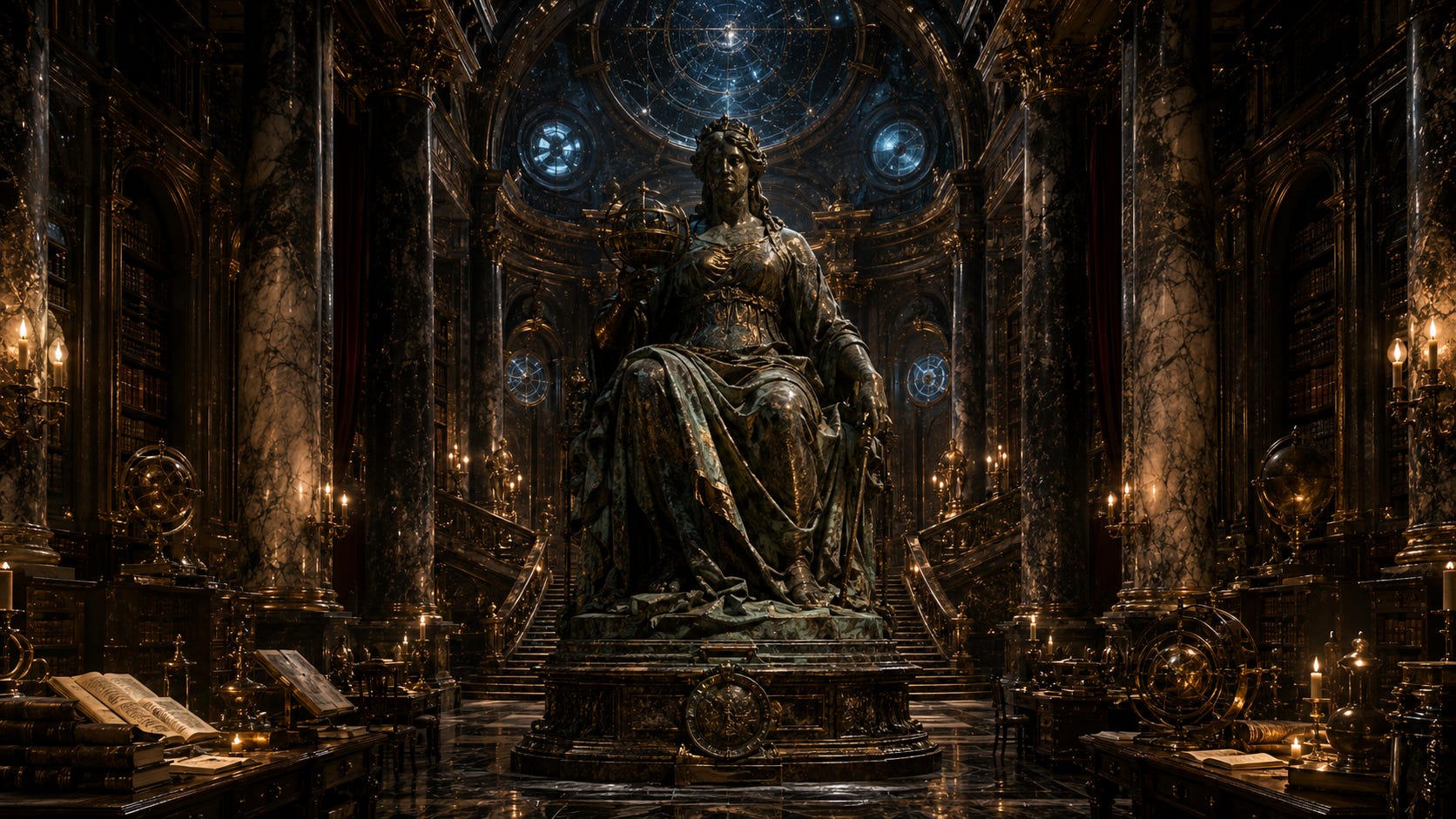
“Time is the first artist. Every craftsman merely negotiates the terms.”
Patina is the visible signature of duration. It is the difference between an object that has survived use and an object that has merely escaped contact with life.
Dark Academia understands this almost by instinct. The worn leather satchel, the softened cuff of an old tweed jacket, the oak table scarred by decades of elbows, ink, tea, and minor despair. These things carry a dignity no factory can counterfeit for long. A new desk can be expensive. An old desk can be authoritative. There is a difference, and the modern world spends billions trying to blur it with distressed finishes and pre-aged nonsense. Fake patina is Botox for furniture. The result always looks startled.
Patina matters because it proves that beauty can accumulate. Modern consumerism teaches the opposite. It treats every mark as damage, every irregularity as a defect, every sign of use as grounds for replacement. The result is a civilization allergic to evidence. Smooth plastics. Flat-pack tables. Synthetic “wood grain” printed like a bad alibi. Nothing ages because nothing is expected to endure.
Patina belongs to an older order. Bronze darkens. Silver tarnishes. Leather creases. Stone softens under hands and weather. Wood deepens in color as if slowly remembering the forest. These changes do not erase the object. They disclose it. They reveal what the material was always capable of becoming once time was allowed to perform its stern little liturgy.
This is why Dark Academia remains compelling beneath the costumes and café photography. At its best, it is a protest against the disposable mind. It insists that books should be handled, rooms should gather traces, and learning should occur in places that feel older than one’s anxieties. A library without patina is a showroom with footnotes. Useful, perhaps. Sterile, certainly.
Patina also teaches hierarchy. Some materials age nobly. Others decay into accusation. Oak becomes grave. Brass becomes luminous in shadow. Leather becomes intimate. Particle board becomes landfill with screws. This is why material choice is moral choice. The cheap object does not merely cost less. It asks less of the future.
To love patina is to accept that beauty and mortality are allied. Time wounds all things, yes. But in noble materials, the wound becomes ornament.
Beauty is the language eternity speaks to time.